





Table of Contents
- Why Breathable Football Kit Matters More Than Ever in 2026
- Moisture-Wicking Football Fabric Technology Explained
- Performance Benefits of Player Version Jerseys
- The Real-Match Impact of a Breathable Football Kit
- How to Wash Professional Football Kits Without Losing Performance
- What to Look for When Sourcing Breathable Teamwear
- Conclusion
Last Updated: August 25, 2026
Why Breathable Football Kit Matters More Than Ever in 2026
Players at every level are training harder and more frequently than previous generations. Kit that traps heat and holds moisture actively limits performance and recovery. A breathable football kit is engineered to allow air circulation, draw sweat away from the skin, and reduce thermal load on the body during physical exertion.
At Kappa Team Sports, we consistently hear from coaches and kit managers whether breathability matters for amateur players or is a professional-level luxury. The honest answer is that it matters more at amateur level. Professional players have access to medical staff, ice baths, and optimal recovery conditions. Amateur players do not. Better kit is one of the few performance advantages a grassroots club can control directly.

The 2026 season has brought warmer average playing conditions across much of the country, following trends documented by the Met Office UK climate projections. Clubs that have upgraded to modern breathable teamwear consistently report that players feel sharper in the final twenty minutes, which is when most goals are scored and most injuries occur.
Moisture-Wicking Football Fabric Technology Explained
Moisture-wicking fabrics transport sweat outward to the garment's surface, where it evaporates quickly, keeping players drier and cooler throughout the match. Most modern performance fabrics use hydrophobic fibre structures that repel water at a microscopic level. Polyester is the dominant base material because it does not retain moisture like cotton does.
The Sports and Exercise Science research guidance from the English Institute of Sport highlights that thermal regulation during exercise directly affects decision-making speed and muscular endurance.
Mesh Ventilation and Microfibre Construction
Mesh ventilation panels are strategically placed zones of open-weave fabric across the back, underarm, and side seams, where the body generates the most heat. These panels allow direct airflow rather than relying solely on wicking action.
Microfibre construction uses fibres finer than a human hair to create dramatically higher surface area relative to weight. This accelerates evaporation and makes the garment feel lighter against the skin. The combination of mesh panels and microfibre construction is what separates genuine performance kit from apparel that simply uses performance-sounding marketing language.
Sustainable Fabric Choices Gaining Ground
Recycled polyester, derived from post-consumer plastic bottles, now matches the performance characteristics of virgin polyester in most independent testing. Several fabric manufacturers have also introduced bio-based fibres that maintain wicking properties while reducing reliance on petrochemical inputs.
For procurement officers at schools and universities, this matters beyond ethics. Many institutions now have sustainability procurement policies that require suppliers to demonstrate environmental credentials. Choosing kit made from recycled or responsibly sourced materials supports those obligations without compromising performance.
Performance Benefits of Player Version Jerseys
Player version jerseys are engineered to a different standard to replica shirts. The fit is anatomical, following the contours of an athlete's body to eliminate excess fabric that would create drag, bunch under body armour, or shift during movement.
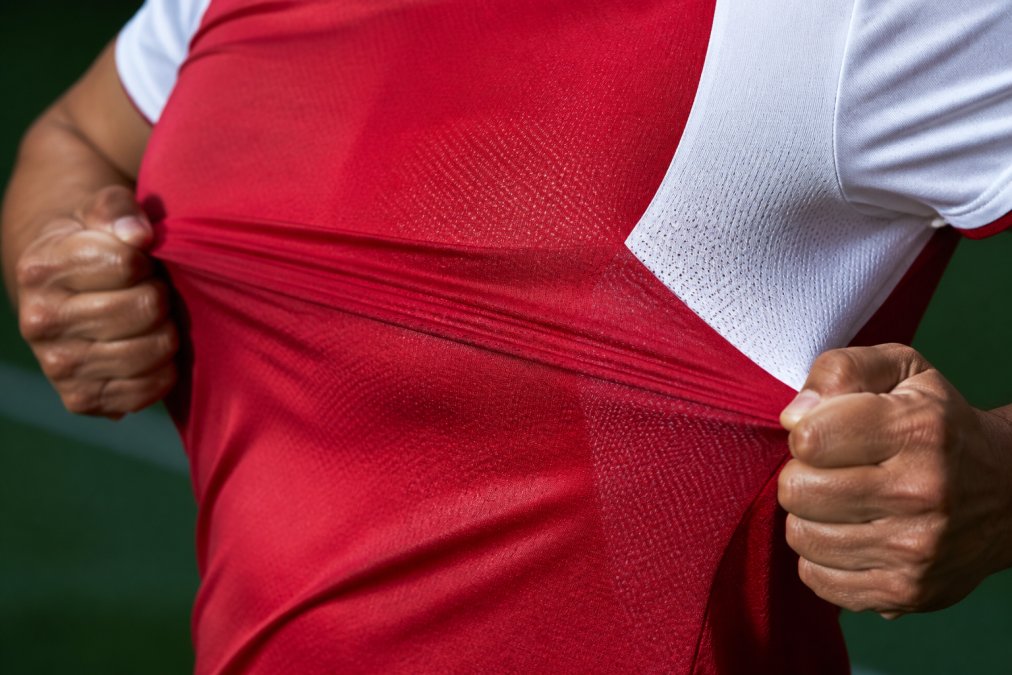
Weight reduction is immediately noticeable. A lighter garment reduces the cumulative energy cost of movement over ninety minutes. When a player covers ten to twelve kilometres during a match, even a small reduction in garment weight has a compounding effect.
Fit, Weight and Freedom of Movement
Player version jerseys use stretch fabrics and ergonomic seam placement to move with the body rather than against it. Traditional shoulder seams sit directly on the shoulder joint, creating friction and restriction during overhead movements. Player version construction moves these seams off the joint entirely, allowing genuine freedom of motion.
For clubs sourcing bespoke teamwear, understanding the difference between a retail-cut and an athletic-cut garment helps you make the right choice for your squad's actual needs.
| Feature | Standard Kit | Player Version Kit |
|---|---|---|
| Fabric weight | Heavier, less refined | Lightweight microfibre |
| Fit | Relaxed, retail cut | Anatomical, athletic cut |
| Ventilation | Basic mesh or none | Zoned mesh panels |
| Seam placement | Standard shoulder seam | Off-joint ergonomic seam |
| Moisture management | Basic wicking | Advanced multi-layer wicking |
| Best for | Replica, fan wear | Match day, training |
The Real-Match Impact of a Breathable Football Kit
The core argument for investing in breathable football kit is preventing the performance drop-off that affects amateur and semi-professional players disproportionately. When body temperature rises and sweat accumulates in heavy, non-wicking fabric, heart rate increases to compensate for reduced thermal regulation, perceived effort climbs, and decision-making quality degrades.
A breathable football kit keeps the microclimate between skin and fabric stable. The player's body does not have to work as hard to stay cool, leaving more physical and cognitive resources available for the match itself.
Fabric that holds moisture also creates a warm, damp environment that accelerates bacterial growth. Modern antimicrobial treatments, increasingly standard in quality performance fabrics, inhibit this process and reduce odour buildup over a season.
How to Wash Professional Football Kits Without Losing Performance
Washing professional football kits correctly is as important as choosing the right fabric. Many clubs invest in quality breathable teamwear and then inadvertently destroy its performance properties through poor laundry practice.
High-performance synthetic fabrics are sensitive to heat. The wicking properties of polyester and microfibre depend on fibre structure integrity. High-temperature washing and tumble drying damage that structure permanently. According to guidance from The Textile Services Association on care labelling and fabric maintenance, following care label instructions is the single most effective way to preserve fabric performance.
The recommended approach for most performance football kits is a cold or low-temperature wash at 30°C or below, using detergent formulated for synthetic fabrics. Air drying is strongly preferred over tumble drying.
Common Washing Mistakes That Destroy Breathability
Fabric softener is the enemy of moisture-wicking performance. Softeners coat fibres with lubricant, which feels pleasant but physically blocks the microscopic channels through which wicking fabrics transport moisture. After several washes with softener, a high-performance jersey performs no better than basic cotton.
Other common mistakes include washing at high temperatures, tumble drying on high heat, using biological detergents with enzyme formulations unsuited to synthetics, leaving wet kit bundled for extended periods, and washing kit with heavy cotton items like towels.
What to Look for When Sourcing Breathable Teamwear
Sourcing decisions come down to four factors: fabric specification, construction quality, customisation capability, and supply reliability.
On fabric specification, ask suppliers directly about fabric weight, fibre composition, and whether antimicrobial treatment is included as standard. A supplier who cannot answer these questions clearly is unlikely to be offering genuine performance fabric.
Construction quality is harder to assess from a catalogue. Request a sample garment before committing to a full squad order. Check seam quality, ventilation panel placement, and how the fabric behaves when stretched.
Customisation capability matters because breathable football kit that looks generic undermines the investment. Sublimation printing bonds colour directly into the fabric rather than sitting on top, does not affect breathability, and does not peel or crack with washing.
Supply reliability is the factor most clubs only think about after being let down. Lead times, minimum order quantities, and resolution processes for colour or sizing discrepancies are questions worth asking before placing an order. At Kappa Team Sports, bespoke teamwear is designed to meet the needs of clubs at every level, with customisation options to tell your club's story through exceptional apparel.
For schools and universities with procurement obligations, check that your supplier can provide documentation on fabric composition and environmental certifications. This supports compliance with institutional purchasing policies.
As the Sport England guidance on club investment and kit standards notes, investing in quality equipment and apparel is a recognised factor in player retention and club development at community level.
Sourcing the right breathable football kit is one of the most practical investments a club can make. Kappa Team Sports specialises in bespoke, high-performance teamwear built to meet the demands of athletes at every level, with full customisation options so your squad takes to the pitch in kit that reflects your ambitions. Use the Kit Builder to start designing your squad's next season apparel.
Frequently Asked Questions
What makes football kit fabric breathable?
Breathability comes from the fabric's structure and fibre choice. Technical polyester and nylon blends draw moisture away from the skin, while laser-cut or woven mesh panels allow air to circulate across high-heat zones like the chest and underarms. The tighter the moisture transfer channels within the weave, the faster sweat moves away from the body. A breathable football kit combines all three elements: moisture transfer, air circulation, and a lightweight construction that does not trap heat.
Why is moisture-wicking technology important for football kits?
Moisture-wicking football fabric technology keeps players drier during intense activity, which directly affects comfort and concentration. Wet, heavy fabric clings to the skin, restricts movement and raises the risk of chafing over a 90-minute match. By moving sweat to the outer surface of the fabric where it evaporates quickly, moisture-wicking materials help regulate body temperature. This matters equally for amateur players and professionals, because the physical demands of a competitive match are the same regardless of level.
How do I maintain the breathability of my team's football kit?
Wash kits inside out in cold or warm water, never exceeding 40°C, and use a liquid detergent formulated for sportswear. Avoid fabric softeners, which coat the fibres and block the moisture-transfer channels that make the fabric breathable. Tumble drying on high heat degrades the polyester structure over time, so air drying is preferable. Store kits loosely folded rather than compressed. Following these steps consistently preserves both the breathability and the printed or embroidered branding on the shirt.
Are 2026 football kits made from sustainable breathable materials?
Many manufacturers now produce breathable football kits using recycled polyester derived from post-consumer plastic bottles. These fabrics match the moisture-wicking and ventilation performance of virgin polyester while reducing reliance on new raw materials. Some ranges also use bluesign-certified production processes that limit water and chemical use. When sourcing teamwear, ask suppliers about the recycled content percentage and whether the fabric carries any recognised environmental certification to verify the sustainability claims.
This article was written using GrandRanker


